How to Become a Christian by Ken Collins
You might be familiar with the yellow Four Spiritual Laws booklet or the older Romans Road technique that some people use for evangelism. Maybe you were trained in using them, or maybe someone approached you with them. I even knew someone who included the booklets in his Christmas cards one year, but later regretted it as having been in poor taste. Both of these techniques involve a series of Bible verses, and end in a prayer that is supposed to transform the potential convert instantly into a Christian, like turning a frog into a prince.
Recently someone flattered me by asking me for a technique like that and requested that I post it on my web site. However, I don’t really like using steps to become a Christian for these reasons:
-
Christianity is a personal relationship with Christ, and I don’t know of any other situation in which there are steps to creating a personal relationship.
-
No one in the Bible told anyone else to “ask Jesus into their heart,” or to “take Jesus as their savior,” nor did anyone in the Bible say that just praying a short prayer makes one a Christian. In other words, even though both techniques use Scripture, neither technique is in Scripture.
-
These techniques emphasize death, not life. They are all about going to heaven, which is in itself not a bad thing, but they don’t say anything about what happens while we wait.
-
The person who prays the prayer at the end of the list often goes away thinking that’s all there is to it. They may even think that everything else is optional, such as prayer, obedience, church attendance, and even morality. They may continue to live a life that is the same as before, completely untransformed. They may claim that Jesus has changed their lives, but the only visible change in their life is that they have a different excuse for doing the very same things as they did before.
-
I don’t think anyone is finished becoming a Christian. I think it is a process of transformation that begins, but does not end, at conversion.
The people who use these techniques to make converts often have to deal with the problem that there is no visible transformation in the person’s life, that the person does not start coming to church, or that the person complains, after praying, that they didn’t feel anything. They deal with this by saying that it is an inner transformation, and that it has nothing to do with behavior or feelings. I have to confess that I am skeptical that anything has changed when nothing has changed.
However, someone did ask me for the steps to becoming a Christian, and I had to answer it one way or the other. As I thought about it, I realized that it is hard to go somewhere without a road map, and that a list of steps can be very helpful to those who are seeking. So in spite of myself, I came up with some steps!
Since being a Christian is a personal relationship with Jesus Christ, we have to ask what form that relationship should take. Making Jesus into your imaginary friend misses the point; you should have gotten over imaginary friends when you were eight or nine years old. Our personal relationship with Jesus Christ is founded on our faith in Him; that is, we trust Him. I observe that if you trust someone, you take his advice. If you say you trust him, but you do not take his advice, you are just humoring him. So we should ask ourselves if we are truly trusting Jesus or just humoring him. If we trust Him, we take His advice. Actually, Jesus didn’t give us advice, He gave us commandments. Our relationship is not founded in obligation, but in love. We should love Him so much that obeying His commandments becomes our highest priority and our greatest joy.
If you love me, you will obey what I command.
—John 14:15, NIV
So here are my steps for becoming a Christian:
-
Repent of your sins and be baptized
Then repeat the following steps for the rest of your life:
-
Be connected with other believers
-
Develop disciplines of good deeds, daily prayer, and fasting
-
Do not fight your enemies, love them
-
Do not denounce sinners, love them
-
Live in harmony with all
-
Remain perpetually in a state of confession
Now I realize this isn’t as easy as the Four Spiritual Laws or as the Romans Road, and that it does not give instant results. In fact, it takes your entire lifetime to do it!
The disciples were amazed at his words. But Jesus said again, “Children, how hard it is to enter the kingdom of God!
—Mark 10:24, NIV
For this reason, I am leery of the instant-Christian-just-add-a-one-minute-prayer method.
Enter through the narrow gate. For wide is the gate and broad is the road that leads to destruction, and many enter through it. But small is the gate and narrow the road that leads to life, and only a few find it.
—Matthew 7:13, NIV
Repent of your sins and be baptized
I said before that no one in the Bible ever asked anyone else to “make Jesus their Lord,” to “take Jesus as their savior,” or to “ask Jesus into their heart.” The reason is that we do not have any choice in these matters. Jesus is already our Lord, He is already our Savior, and He already knows the secrets of our hearts. It’s not a matter of making or taking or asking, it is a matter of resisting or confessing—confessing that even though we denied these facts in the past, they have been true all along.
Therefore Scripture does not ask us to make Jesus Lord, but to confess that He already is. On Pentecost, when the people in the crowd asked Peter how to become Christians, he did not whip out a little yellow book of spiritual laws:
Peter replied, “Repent and be baptized, every one of you, in the name of Jesus Christ for the forgiveness of your sins. And you will receive the gift of the Holy Spirit.”
—Acts 2:38, NIV
Notice that Peter does not say, “repent, receive the Holy Spirit, and be baptized.” The order is repentance, baptism, and then the Holy Spirit. For this reason, after converts were baptized in the ancient church, the bishop breathed on them and said, “Receive the Holy Spirit.”
Peter says, “repent of your sins.” That means you have to admit all of the bad things you’ve done and promise Jesus that you won’t do it again. It’s more fun to skip this part, but in the long run, it is better if you do it.
Repeat these Steps for the Rest of your Life
Since it is the Christian walk, not the Christian wheelchair, or even the Christian been-there-done-that, there’s more to being a Christian than just walking over the threshold into salvation and sitting down. We do not walk up to Jesus and say, “You are Lord,” and then go about our business; we follow Him. We follow Him all the days of our lives, and that entails doing the remaining steps all the day of our lives.
Be connected with other believers
When I say you should be connected with other believers, I don’t mean that you should attend a church regularly, though that is a part of it. You are part of the Body of Christ, and you should be part of all of it.
Now you are the body of Christ, and each one of you is a part of it.
—1 Corinthians 12:27, NIV
That means you should be part of all Christians:
After this I looked and there before me was a great multitude that no one could count, from every nation, tribe, people and language, standing before the throne and in front of the Lamb.
—Revelation 7:9a, NIV
Don’t stop with your church leaders, or your denomination. Don’t stop with the Reformation. Include Christians with different viewpoints than yours; include the early Church fathers, and the Eastern Orthodox. (I once told a parishioner not to get his theology from the Reformation, because it was an argument. The two sides didn’t discuss what they agreed on.)
And there is a purpose to being connected with other Christians:
So, my brothers, you also died to the law through the body of Christ, that you might belong to another, to him who was raised from the dead, in order that we might bear fruit to God.
—Romans 7:4, NIV
Notice he says, “bear fruit,” and that leads us to additional steps.
Develop disciplines of good deeds, prayer, and fasting
In Matthew 6, Jesus tells us three duties of a Christian: good deeds, prayer, and fasting. I’ve just quoted the beginnings of the three sections of this passage, because I want to make a point—but you should read the full text on your own:
So when you give to the needy…
—Matthew 6:2a, NIV
And when you pray…
—Matthew 6:5a
When you fast…
—Matthew 6:16a
Notice that Jesus does not say, “if you elect to give to the needy,” or “if you should happen to pray,” or “if you decide to fast.” Jesus assumes that we do them. He says, “when you give,” “when you pray,” and “when you fast.” Therefore we must develop a lifestyle of doing good deeds for others, praying, and fasting. Or we could say: social action, worship, and self-discipline.
There are people who keep prayer diaries, marking down what they asked for and how God answered it. Perhaps we should keep track of ourselves rather than God. Why not keep an obedience diary instead? Perhaps you could get together with some Christian friends and work out an agreement about how you will do this, then meet every week for mutual support.
Do not fight your enemies, love them
You have heard that it was said, ‘Love your neighbor and hate your enemy.’ But I tell you: Love your enemies and pray for those who persecute you, that you may be sons of your Father in heaven. He causes his sun to rise on the evil and the good, and sends rain on the righteous and the unrighteous. If you love those who love you, what reward will you get? Are not even the tax collectors doing that?
—Matthew 5:43-46, NIV
Now it is real easy to develop a discipline of doing good deeds for other people in your family or in your church, but Jesus isn’t impressed with that. Even people in the Mafia love each other. It is no credit to you that you love the people who love you. By all means love them, but don’t count that as obedience in your obedience diary.
When you develop your discipline of doing good things for other people, make sure you do them for people outside your family, who don’t go to church, who are total strangers, or who are even enemies. Imagine how transformative it would be if you did something nice for your adversary in office politics, or the neighbor that no one can stand.
Do not denounce sinners, love them
Do not judge, and you will not be judged. Do not condemn, and you will not be condemned. Forgive, and you will be forgiven.
—Luke 6:37, NIV
It is all the rage these days—and the word “rage” strikes me as doubly appropriate—to denounce sinners. I think it is very dangerous to cordon off entire chunks of the human race and condemn them as a group. For one thing, it is very difficult to make a category of people without omitting some who should be in it, or including some who should not. There are always gray areas, too. It isn’t a right judgment. Most importantly, judging others makes you just as sinful as the people you condemn, because judging others is itself a sin.
We are allowed to have standards for members of our church, but we are not allowed to judge those outside.
What business is it of mine to judge those outside the church? Are you not to judge those inside? God will judge those outside. “Expel the wicked man from among you.”
—1 Corinthians 5:12-13, NIV
Live in harmony with all
Occasionally people become “successes,” and suddenly none of their friends are good enough for them any more. They move in different social circles, and begin to treat waiters and janitors with condescension. That even happens to people when they become Christians! They forsake their friends and loved ones, pal around only with like-minded people, and treat people whom they think are not Christians with contempt. This is definitely not the way to go. If you remove yourself from your former associations, who is going to be a Christian witness to them? And by “witness” I don’t mean by what you say to them, I mean by the way you treat them.
Live in harmony with one another. Do not be proud, but be willing to associate with people of low position. Do not be conceited.
—Romans 12:16, NIV
Remain perpetually in a state of confession
Some people think that confessing their sins at the point of conversion is all they need to do. It would be nice if that were true, because owning up to faults and sins is hard and embarrassing to do. Face it, no matter what your theology teaches, you mess up after you become a Christian. If you don’t confess your sins to the Lord, but simply think of the mitigating circumstances and excuse yourself, your forgiveness does not come from the Lord, but from yourself.
John, writing to people who are already Christians, says:
If we confess our sins, he is faithful and just and will forgive us our sins and purify us from all unrighteousness. If we claim we have not sinned, we make him out to be a liar and his word has no place in our lives.
—1 John 1:9-10, NIV
From time to time, you should sit down and think about your life. Every time you remember something painful, something bad you did, something you’d rather forget, or something that makes you wince every time you think of it—confess it to the Lord. Make it your goal that when you come to the end of your life, you will be fully confessed. It isn’t fun at first, but it will do you a lot of good—you won’t be suppressing anything, and you’ll be at peace with yourself.
You should not restrict your confessing to God. If you have wronged someone, you should admit it and make it up to them; and if someone asks you for forgiveness, you should readily give it, because Jesus teaches us to pray:
Forgive us our sins, for we also forgive everyone who sins against us.
—Luke 11:4, NIV
Let us not be found liars before God.
Perpetually Becoming a Christian
There was an ancient Eastern Orthodox saint who said that we should apply the blessings of Scripture to others and the warnings of Scripture to ourselves, because we do not know what is in other people’s hearts, but we do know what is in our own. I think that sums up things pretty well. It’s a great way to live.
If you do these things, you will not only be in the process of becoming a Christian, you will always be in the process of becoming truly transformed, from the innermost parts of your soul to the outermost tips of your fingers, into the glory and likeness of Jesus Christ.
America’s day of reckoning just 60 days away?

Two months from now the biblical Shemitah year will have played out and only then will we know whether it has left any significant event in its wake.
In the past, this seven-year cycle has brought collapsing stock markets, tumbling currencies and the shaking of nations and empires.
This period of early autumn was the most crucial time on the biblical calendar for the ancient Israelites, with the end of the seven-year cycle described in Deuteronomy as the Shemitah or Sabbath year. All farmland was to be left in a state of rest and the people were to focus on God and His will for their nation and their lives.
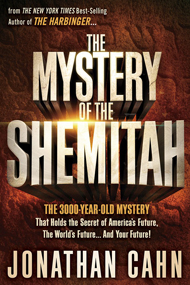
This year on Sept. 13, the Shemitah reaches its peak on the last day on the Hebrew calendar, Elul 29, known as the “day of nullification.” All debt and credit were to be wiped away on this day as described by author Jonathan Cahn in his New York-Times bestseller, “The Mystery of the Shemitah,” published in September 2014.
image: http://www.wnd.com/files/2014/08/mystery_shemitah.jpg
 But the Shemitah can be a game-changer not only for economies and stock markets but also in geopolitics.
Are America’s days as world leader numbered?
There is no arguing the fact that the United States of America has been the most powerful “empire” on earth since the end of World War II. Its corporations have been the engine that drives the global economy and its politicians have set the tone for the world order. It’s no coincidence the United Nations is based in New York City, the seat of global financial power.
But even as the nation’s economy flounders and it has gone from the world’s largest creditor to the world’s largest debtor, American culture has also drifted farther and farther from God. Some believe it has drifted beyond the point of return, into full-blown rebellion, with the June 26 landmark Supreme Court decision on marriage being only the latest symptom of a nation that has come unhinged from its foundational belief system. Obergefell v. Hodges was the biggest shock to Judeo-Christian moral sensibilities since Roe v. Wade in 1973. Both decisions came down in Shemitah years.
In the oft-quoted words of American political philosopher F.P. Dunne, “the Supreme Court follows the election returns.” If that’s true, such monumental shifts in the court’s rulings should not be viewed in a bubble. The five justices who decided to radically alter the legal definition of marriage could not have ruled that way unless they felt the majority of Americans were ready to accept their decision, if not totally agree with it. Thus far it does not appear that they miscalculated. The overwhelming majority of county clerks are issuing marriage licenses to same-sex couples and those who have refused are being replaced by more obedient bureaucrats.
The 20th century’s greatest Christian thinkers, men like Alexander Solzhenitsyn and Francis Schaeffer, believed that a civilization could not continue indefinitely apart from the will of God. Soviet communism fell, Nazi Germany fell, the British Empire disintegrated. And many scholars see the whole of Western civilization as in decline now that it has rejected the very Christianity that made it great. It has succumbed to the pressures that have warred against it from the beginning.
Shemitah shakes empires
One of the chapters in Cahn’s book “The Rise and Fall of Nations” shows how the ancient Shemitah mystery is linked to massive changes of world history – world wars, the rise and fall of nations and empires.
Global problems in our day seem to be spinning out of control. Lawlessness is on the rise. The current order in the Middle East, in place since the end of World War I, has been turned on its head.
“What we are watching now is a massive destabilization throughout the world – from ISIS, to the war in Syria, to the collapse of Greece, the collapse of the Chinese stock market, the destabilizing of the European Union, the issue of nuclear weapons and Iran, the moral and spiritual transformation of America, the deterioration of relations between America and Israel, and more,” Cahn told WND.
In the financial realm, the markets have been expanding since 2009. Cahn believes the Shemitah, if it follows its pattern of the past two seven-year cycles, will bring a shaking in the financial realm first.
“And just now as we approach the climactic last part of the Shemitah, we see the sudden destabilization of the global financial realm,” said Cahn, who authored “The Harbinger,” which became a New York-Times bestseller in 2009.
“Added to this, the Greek crisis specifically deals with issues of debt and debt relief – the central issue of the Shemitah,” he added. “Whether or not the crisis finds a resolution, the very fact that such sudden destabilization of the global financial realm has taken place, and having to do with the issue of debt and credit and the issue of relief, just as the Shemitah nears its climactic period, warrants our attention. And as the Shemitah deals with the wiping out of financial accounts, we now witness China’s financial (stock market) losing 30 percent of its value in less than a month, is more than striking.”
States falling into line even before court’s edict
But it will not stop with the financial realm.
“The Shemitah also can mean ‘the fall.’ And we are watching the greatest, most rapid moral and spiritual fall in American history,” Cahn said. “In the year of the Shemitah, the number of states that struck down the biblical definition of marriage went from a small minority, in the teens, to the majority, and then at the end of June, came one of the most momentous decisions in American judicial history – and history itself – the striking down of the biblical and historic definition of marriage.
“This is a pivotal event with colossal ramifications, and one that draws America one step closer to judgment.”
When Obergefell v. Hodges was being argued before the Supreme Court in March, Cahn said he saw a woman holding a sign that read “Don’t Cross this Line.” He stopped and prayed with her.
Holy matrimony was the first covenant between God and man in the Garden of Eden, when God gave Eve to Adam and the two, male and female, were to become “one flesh” with God as their witness. In the New Testament, marriage is further revealed as a type, a foreshadow, of the relationship between God and his Church, which is called the “Bride of Christ.”
Now man has taken what is holy before God, the marriage covenant, and redefined it in a way that appears right to man in his humanistic way of thinking devoid of the Holy Spirit’s guidance. A line has been crossed, Cahn said, and so the only prayer left to pray is one for repentance and mercy.
America is heading for judgment. Whether that judgment entails a stock market collapse, a collapse of the dollar, or something further down the road that is even worse, Cahn is also praying that the individual Christians that make up the body of Christ in America will get right with God and repent of their sins.
For judgment always starts “in the house of the Lord.”
- image: http://www.wnd.com/wp-content/plugins/wp-print/images/print.png
Read more at http://www.wnd.com/2015/07/americas-day-of-reckoning-just-60-days-away/#7aEAMJ2JJdMb289U.99

After Four Months, 20 Chaldean Iraqi Christians Who Fled ISIS Still Detained by Immigration Officials | Pamela Geller

“After Four Months, Why Are 20 Chaldean Iraqi Christians Who Fled ISIS Still Detained by Immigration Officials?,” by Ray Nothstine, Christian Post, July 10, 2015:
Despite having family members to sponsor them, a group of 20 Chaldean Christians who fled ISIS have been detained for over four months at the Otay Detention Facility in San Diego. The large Chaldean community in Southern California are unhappy with the unexplained delays and are demanding their release.
U.S. Immigration and Customs Enforcement (ICE) claim they are undermanned and face a backlog of cases but have offered little to the media about the prolonged detention of the Chaldean 20.
Mark Arabo, an activist and spokesmen for the local Chaldean community says, “What we do know is that they are being held without a real reason.”
Arabo has pleaded with the highest levels of government demanding action for the group being held.
“We are protesting, we are talking to the State Department, and the White House and Congress, and we are putting pressure to make sure they release these twenty people,” he declared to Al Jazeera. Arabo believes the excuses from immigration officials about indefinitely detaining them for bureaucratic reasons is “hard to believe.”
Arabo pointed out that the men and women in detention have been held too long even by the government’s own standards. The vast majority of foreign nationals detained or arrested by ICE are released under some form of supervision, according to their own statement.
“They’ve escaped hell. Let’s allow them to reunite with their families,” says Arabo. According to a Los Angeles Times report and an ACLU attorney in San Diego, detainees held for six months that have not seen a judge are by law required to have a court hearing.
Faith, McDonnell, director of religious liberty at the Institute on Religion & Democracy told The Christian Post the detainment is “a disturbing pattern” by the State Department.
“The fact that these asylum seekers are Christians and not Muslim and potential members of ISIS or some other jihadist group (which, of course, we don’t discuss, anyway) does not make the “processing” any easier,” declared McDonnell.
“This follows the disturbing pattern that we have seen from the State Department of ignoring the particular targeting of Christians by ISIS,” said McDonnell, “while giving preferential treatment for asylum to other groups with expedited processing — like Somalis, Iraqis, and Syrians, some of whom could very well be members of jihadist movements.”
The number of Christians who have fled Iraq just since the rise of ISIS is estimated at well over 100,000. In March of this year the Chaldean Patriarch of Iraq, Raphael Louis Sako, testified at the United Nations Security Council saying, “The Islamic extremists groups refuse to live with non-Muslims. Iraqi Archbishop Bashar Warda has stated publicly that the only way to preserve Christianity in Iraq is to defeat ISIS militarily.”
“These are Christians who fled for their lives,” adds McDonnell, “who have family members willing to sponsor them, and whom, we can lay bets, will not shoot innocent young women in the back for fun, the way illegal immigrant Juan Francisco Lopez-Sanchez did.
“Not only are the Chaldean Christians themselves being eradicated from their ancient homeland by ISIS, but the ancient culture that goes back far beyond the Islamic invasion and conquest is also being obliterated by the barbaric actions of ISIS.”
El Cajon, California, just outside San Diego, is second behind Detroit with the largest population of Chaldean Christians in the United States. Tens of thousands Chaldeans fleeing ISIS have found permanent homes in El Cajon.
– See more at: http://pamelageller.com/2015/07/after-four-months-20-chaldean-iraqi-christians-who-fled-isis-still-detained-by-immigration-officials.html/#sthash.OBfU7rFT.dpuf
http://pamelageller.com/2015/07/after-four-months-20-chaldean-iraqi-christians-who-fled-isis-still-detained-by-immigration-officials.html/


“Your God, whom you serve continually, He will deliver you.” (Daniel 6:13,16)

That Daniel, who is one of the captives from Judah, does not show due regard for you, O king, or for the decree that you have signed, but makes his petition three times a day…
So the king gave the command, and they brought Daniel and cast him into the den of lions. But the king spoke, saying to Daniel, “Your God, whom you serve continually, He will deliver you.” (Daniel 6:13,16)
Early the next morning the king went in haste, saying:
“…Daniel, servant of the living God, has your God, whom you serve continually, been able to deliver you from the lions?” (Daniel 6:20)
The faithfulness of God showed up in dire times – to the man who prayed, persisted, persevered, who fasted and obeyed.
King Darius thought he knew what was best, when satraps & governors tricked him to sign an edict that only he would be worshiped for one month. But God knew better, and Daniel followed God… So in he went to the lion’s den…
Yet, the faithfulness of God showed up when he needed it; He sent His angel to guard his servant.
The faithfulness of God comes on the scene as we pray, fast and obey the One and Only who gave His life for us.
In Him,
Kari Bitz Author/Founder Cord of 3 Ministries
www.cordof3.net
cordof3@bektel.com
U.S.Denying Visas for Christians Facing Muslim Persecution | Creeping Sharia
U.S. State Dept Denying Visas for Assyrian Christians Facing Muslim Persecution
The U.S. State Department may have sent a signal to an Anglican bishop in Iraq that despite persecution and harassment from the terror group known as ISIS, Christians in that country will not find any support from the United States government. (Photo via Gospel Herald)
According to Faith J.H. McDonnell of Philos Project, the Rt. Rev. Julian M. Dobbs, bishop of the Diocese of CANA East (Convocation of Anglicans in North America), revealed that part of U.S. foreign policy during an interaction with the State Department’s Bureau of Population, Refugees and Migration (PRM). Dobbs made his case to the State Department on behalf of a group of Assyrian Christians who are desperate to leave northern Iraq.
“There is no way that Christians will be supported because of their religious affiliation,” the State Department said.
McDonnell reported that the Assyrian Christians received both the permission and blessing from their own bishop to leave Iraq. Until recently, church leaders in the region have urged Christians to stay in the Middle East; now they have concluded that their chances of survival are much better if they left.

“Christianity in Iraq is going through one of its worst and hardest stages of its long history, which dates back to the first century,” Archbishop Bashar Warda of Erbil said. “Throughout all these long centuries, we have experienced many hardships and persecutions, offering caravans of martyrs. Yet 2014 brought the worst acts of genocide against us in our history.”
Warda added that “Christianity as a religion and as a culture from Mesopotamia [ancient Iraq]” now faced “extinction” due to the ongoing threat posed by ISIS.
McDonnell elaborated on the plight of Christians and other minorities in the region since ISIS took over the Iraqi city of Mosul in June 2014.
“Christians, Yazidis, Mandeans and others were targeted for destruction, and within just the first week of ISIS’ occupation, more than 500,000 people fled the city,” McDonnell wrote. “The homes of Christians were marked with the Arabic letter ‘nun,’ standing for Nazarene. Christians were threatened with death if they did not convert to Islam, pay jizya and live as a subjected people—’dhimmi’—or flee immediately.”
According to McDonnell, Christians have even been threatened by some Muslims in the refugee camps run by the UN Refugee Agency, or UNHCR. However, the State Department has refused to resettle affected Assyrian Christians in the United States.
“Donors in the private sector have offered complete funding for the airfare and the resettlement in the United States of these Iraqi Christians that are sleeping in public buildings, on school floors, or worse,” McDonnell wrote. “But the State Department—while admitting 4,425 Somalis to the United States in just the first six months of 2015, and possibly even accepting members of ISIS through the Syrian and Iraqi refugee program, all paid for by tax dollars, told Dobbs that they ‘would not support a special category to bring Assyrian Christians into the United States.’”
McDonnell contended that the United States government made it clear religious affiliation does not mean support for Christians in the region in the form of asylum.
“The State Department, the wider administration, some in Congress and much of the media and other liberal elites insist that Christians cannot be given preferential treatment,” McDonnell wrote. “Even within the churches, some Christians are so afraid of appearing to give preferential treatment to their fellow Christians that they are reluctant to plead the case of their Iraqi and Syrian brothers and sisters.”
https://creepingsharia.wordpress.com/2015/07/12/u-s-state-dept-denying-visas-for-assyrian-christians-facing-muslim-persecution/